
Walk into any transport office and you'll usually find the same thing: a software subscription nobody quite trusts, running alongside the WhatsApp groups and Excel sheets that actually get the work done. Not because the software is badly built — often it isn't — but because it was built to impress a buyer in a sales call, not to survive a Tuesday morning when three trucks are late, one driver isn't answering, and a party is asking where their goods are.
We've spent enough time inside real fleet operations to notice a pattern: what gets sold and what actually gets used are usually two different products.
What gets sold
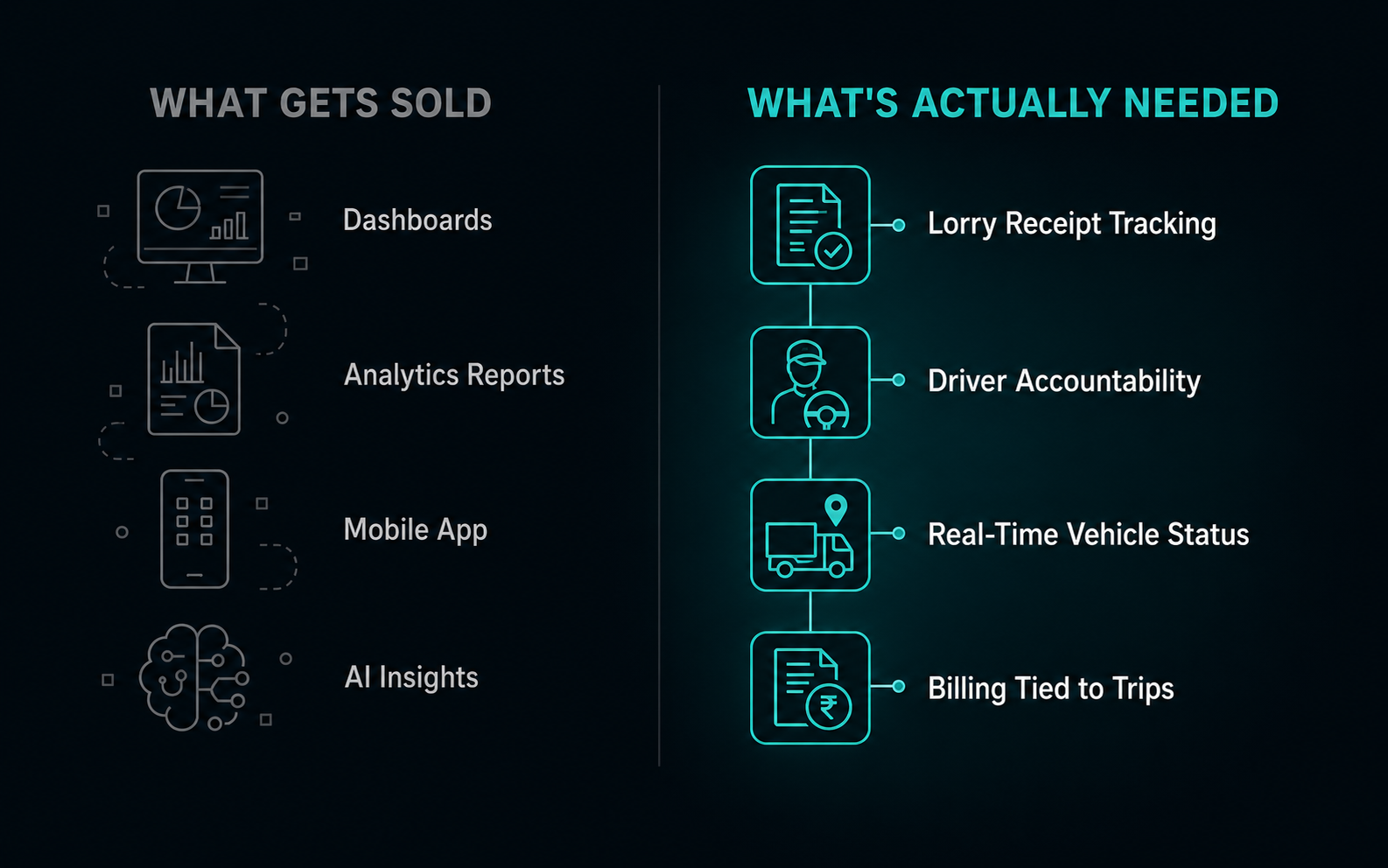
Most fleet software pitches sound like this: dashboards, analytics, AI-powered insights, a slick mobile app. All genuinely nice to have. None of them are the thing that decides whether an operations team adopts the software or quietly goes back to Excel by month two.
What's actually needed
The businesses we've built for care about a much shorter list — and it's a less glamorous one:
- A single order that carries the whole trip — booking, vehicle, route, and billing tied to one Outward Service Order, not scattered across five different screens
- Driver accountability — who has the vehicle, where it's supposed to be, and who's responsible if it isn't
- Real-time status that reflects what's actually happening — loading, in transit, delivered — not a field someone forgot to update three days ago
- Billing that flows straight out of the trip, so finance isn't re-typing freight details a second time
None of this is exciting to put on a landing page. But it's the difference between software that gets opened once during onboarding and software that a dispatcher is still using six months in, out of habit rather than obligation.
Why the Outward Service Order, and not five separate modules
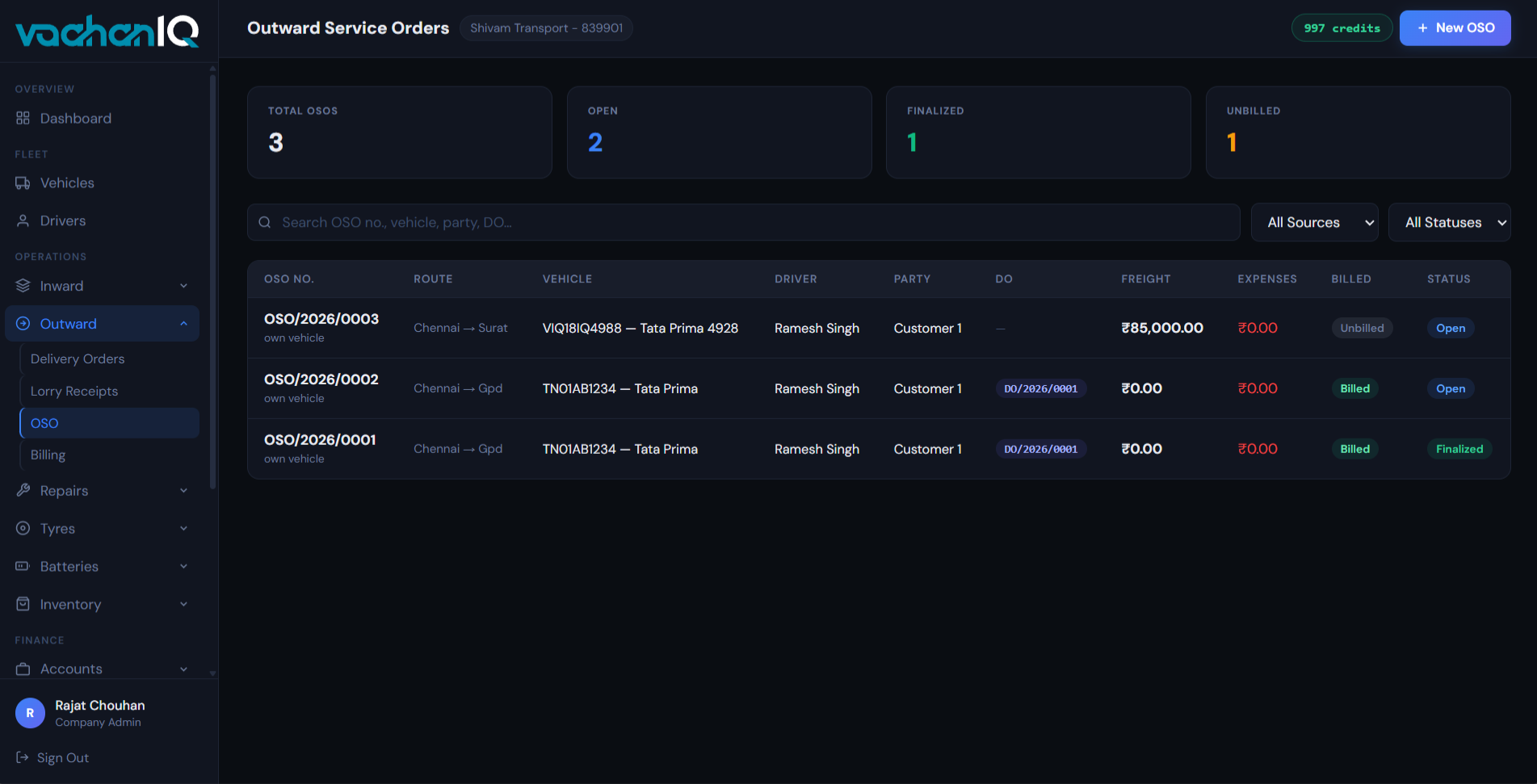
In VaahanIQ, the OSO is the center of gravity for a trip. Booking details, vehicle assignment, route, freight, expenses, and billing status all live on one object instead of being spread across disconnected screens that someone has to manually reconcile at month-end. When a trip moves from open to billed to finalized, that's the OSO changing state — not three different systems being updated by hand and hoping they agree with each other.
It doesn't stop at the trip
A fleet isn't just trips — it's the vehicles that make the trips possible. That's why VaahanIQ also handles repairs, tyres, batteries, and garage inventory, and ties all of it back into real double-entry accounts. A tyre replacement isn't just a maintenance log entry sitting in isolation; it's an expense that actually shows up in the vehicle's cost history and the business's books, the way it would if an accountant were tracking it by hand — except nobody has to track it by hand.
That's the actual bet behind VaahanIQ: not more dashboards, but fewer places where the truth of what happened can quietly drift apart from what's on paper.